Climate change stories
Competition and Markets Authority (CMA) introduces new guidance to help businesses collaborate on environmental sustainability while complying with the law.
Iris.ai launches RW 1.0 to tackle inaccuracies in AI-generated research summaries, marking a significant step forward for the AI industry.
The project aims to save companies money and give unwanted IT equipment such as laptops, PCs, phones and tablets a new lease of life.
OVO and Monte Carlo CEOs discuss empowering customers with data to tackle climate change at Big Data LDN event.
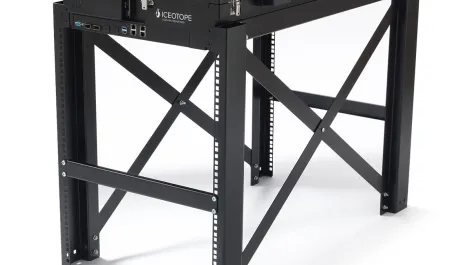
Iceotope and etisalat showcased cutting-edge liquid cooling technology at GITEX GLOBAL in Dubai, promising significant energy reductions for data centres.
Stanley Capital Partners invests in tech company Roboyo, aiming to enhance the global leader in hyper-automation's growth.
The study reveals insights into various fuel systems utilising green hydrogen for data centre backup power to support Singapore's hydrogen strategy.
Combining digital and industrial data, Hitachi Vantara helps customers intelligently assess IT systems and OT processes for a more energy-efficient future.
The company is changing how it operates its business, engages with suppliers, and helps customers and communities.
Brendan Smart, who is the Country Manager at InfoTrack, joins us today to tell us more about InfoTrack and what they are doing in APAC market. .
Schneider Electric's technology will be utilised to deliver highly sustainable data centre solutions across GreenSquareDC's regional data centre pipeline.
The new solution empowers enterprises to achieve sustainability goals through a lower-carbon emissions alternative to transport IT purchases.
Brake's annual awards in Auckland have honoured firms and individuals cutting crashes and emissions from work vehicles across Australasia.
As an emitter of CO2 and other gases, the diesel generator is an obvious target for emissions-reduction regulation.
Stockholm will bar petrol and diesel cars from its centre from late 2024, raising air-quality hopes but prompting grid and charging worries.
The pilot program will test e-bikes from a range of partners, including Dutch Cargo, Zoomo, Lime, and Lug+Carrie.
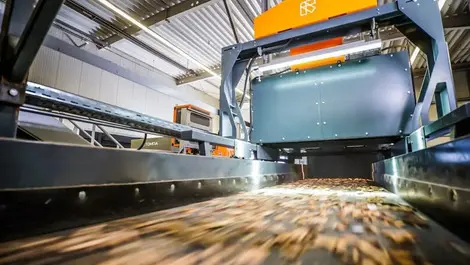
Deep learning could recover hard-to-detect materials, lift recyclate quality and cut landfill use as Europe tightens recycled-content rules.
New Zealand’s infrastructure sector is urging the incoming Government to speed up investment, reform planning and tap private capital.
Infrastructure groups warn uncertainty is deterring investment, slowing digital upgrades and leaving New Zealand exposed to worsening climate shocks.
Desperate tenants are now offering above asking rents as migration and storm damage squeeze Auckland's inner-city housing supply.