

PERI UK expands digital engineering for temporary works
Thu, 29th Oct 2026 (Today)
PERI UK has expanded its digital engineering services for temporary works in construction, adding more design and visualisation support across projects.
The expanded offer combines engineering with Building Information Modelling, 3D visualisation, clash detection and extended reality tools. It is intended to help customers review temporary works solutions before construction begins on infrastructure, high-rise, commercial, residential and industrial schemes.
The service can be used from the early planning stages to help teams visualise, coordinate and refine temporary works before activity starts on site. This can help identify conflicts between temporary and permanent works earlier, while supporting project planning, sequencing and installation.
David Seber, Digital Lead at PERI UK, said the company uses digital tools alongside engineering input rather than as a substitute for it.
"Our aim is to produce great engineering design and help customers make better decisions before construction even begins," Seber said.
He said PERI UK uses 3D models, clash detection, animations and mixed reality to improve collaboration and design certainty for project teams.
Digital workflow
According to PERI UK, its digital outputs are developed to match project-specific BIM methods and information management requirements, while following the company's engineering standards. Models can also include project-specific data such as pour IDs and asset numbers.
Rendered visualisations can be used in tender submissions and to support communication between project stakeholders. Design overview animations can show construction sequences, while assembly and operational animations can support installation planning and Risk Assessments and Method Statements.
"By combining engineering expertise with digital tools such as 3D models, clash detection, animations and mixed reality, we can improve collaboration, increase design certainty and give project teams the confidence to build safely and efficiently," Seber said.
PERI UK also offers model coordination workshops, live quantity take-offs and digital support during installation and operation. It describes this as a connected workflow running from concept through to completion.
XR tools
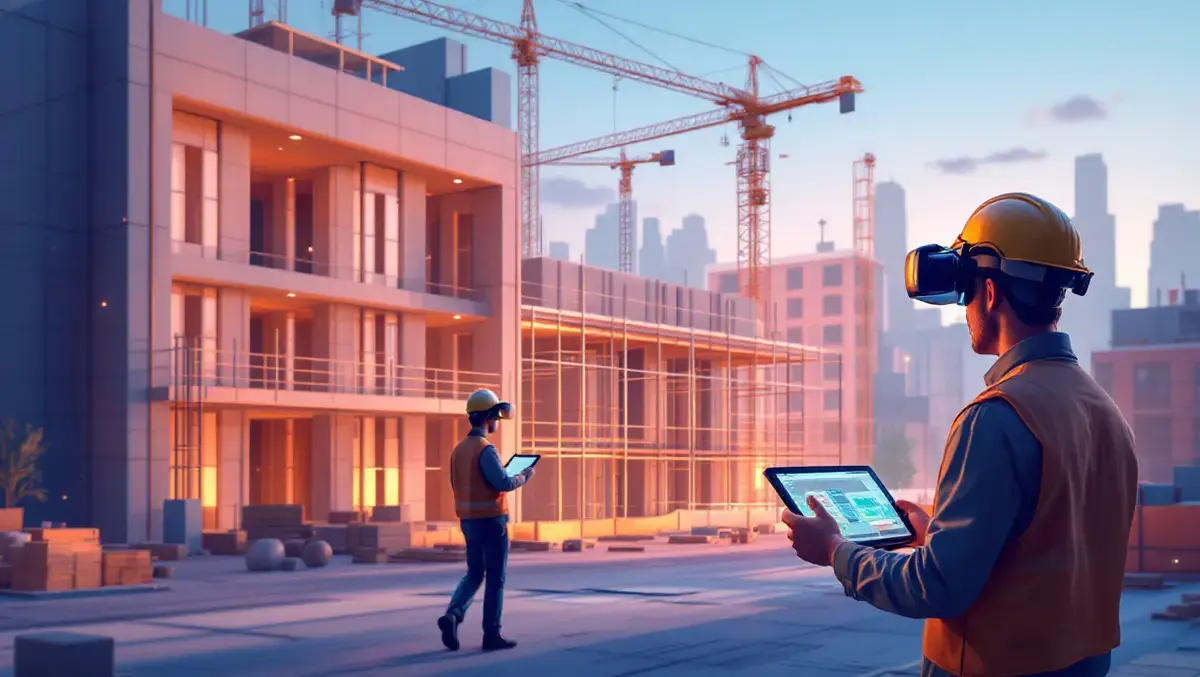
A central part of the offer is the PERI XR app, which lets customers interact with temporary works models through augmented and virtual reality. Available through app stores and web browsers, the platform allows teams to navigate full 3D models on mobile devices and tablets.
Models can be explored in a virtual environment or overlaid on physical surroundings using augmented reality. This can give site teams and other stakeholders a more visual way to review proposed works and installation requirements.
"Successful projects rely on good planning, clear communication and effective collaboration," Seber said.
He said the early use of BIM and digital engineering processes allows the business to work with customers on digital outputs that fit project requirements.
PERI UK said immersive tools can help designers, engineers, contractors and site teams communicate more effectively. Making temporary works easier to visualise can also support safer installation and stronger engagement across project teams.
"By implementing BIM and digital engineering processes from the earliest stages, we can work alongside customers to establish digital outputs that meet their specific requirements," Seber said.
Construction planning
The wider construction sector has increased its use of digital planning and coordination tools as contractors and suppliers seek to reduce design errors, improve safety and address cost pressures before work reaches site. Temporary works, which often require close coordination with permanent structures and installation sequences, are one area where these tools are being adopted more widely.
PERI UK said one of the main benefits is the ability to identify issues before site work starts. This can reduce uncertainty and improve confidence in the proposed solution.
"The benefit is being able to identify potential issues before they reach site, reducing uncertainty and giving project teams greater confidence in the solution before construction starts," Seber said.
He added that the value of the company's digital work should be measured by its effect on coordination, communication and project delivery rather than by visual presentation alone.
"Rather than interpreting complex drawings alone, customers can navigate and interact with full 3D temporary works models. This gives teams a more intuitive understanding of construction sequences, installation requirements and proposed outcomes," Seber said.
PERI, which has operated in the UK since 1969, is one of the larger suppliers of formwork and scaffolding worldwide, with more than 10,000 employees. In the UK, it supports civil engineering and building customers through a network of depots and design offices.
"Digital services are not intended to replace engineering expertise, they're here to enhance it," Seber said. "By integrating digital technologies with engineering knowledge, customers can benefit from smarter planning, clearer communication and greater confidence at every stage of a project. As construction continues to embrace digital delivery, PERI UK remains focused on developing services that complement its proven solutions."